
Post
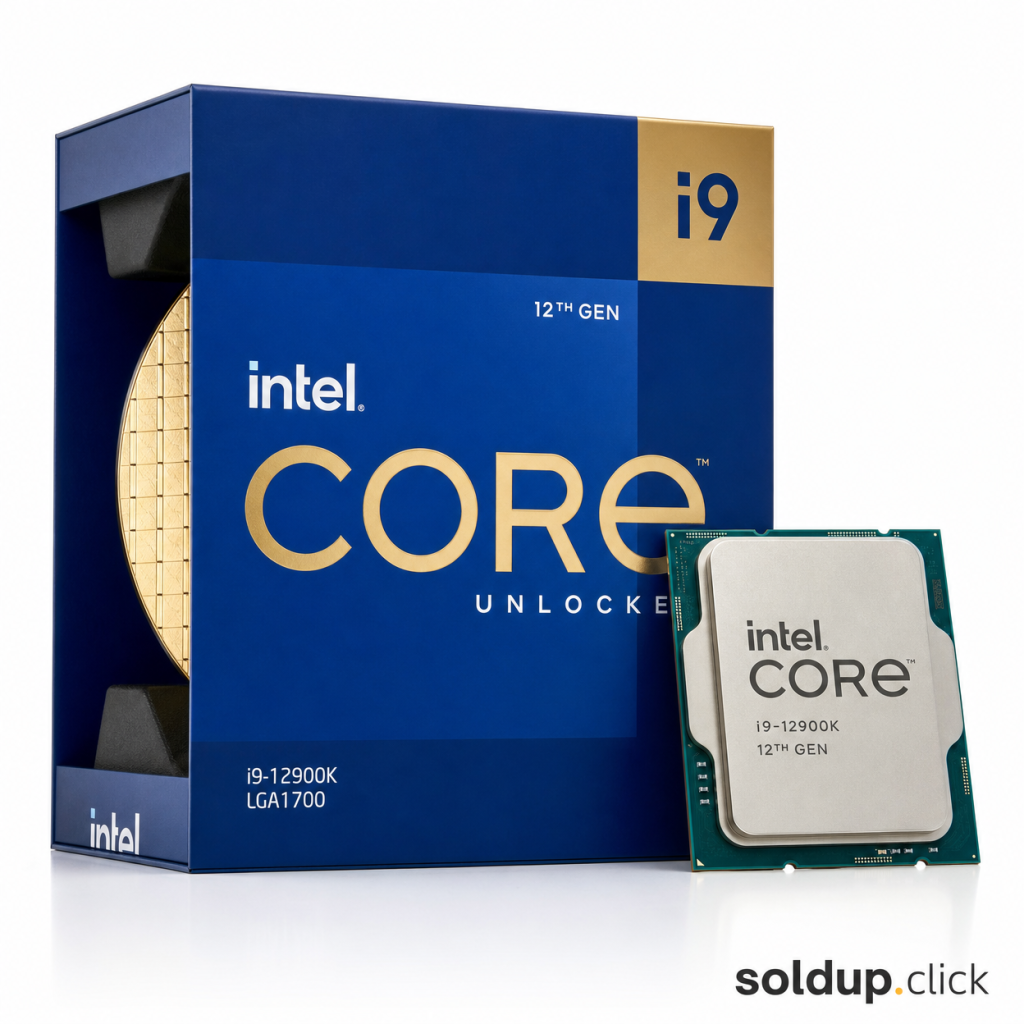
Intel Core i9-12900K Desktop Processor
May
Introduction
The Intel Core i9-12900K marked a turning point for Intel when it launched in late 2021. As the flagship processor of the 12th Generation Alder Lake lineup, it was not just another incremental upgrade—it was a fundamental redesign of Intel’s desktop CPU architecture. After years of competition pressure from AMD’s Ryzen lineup, Intel responded with a bold hybrid design that redefined how desktop processors manage performance and efficiency.
This processor introduced a new era for Intel by combining high-performance cores and high-efficiency cores on a single chip. Originally inspired by mobile processor design philosophies, this hybrid architecture was adapted for desktop workloads with impressive success. The result was a CPU that could handle both demanding gaming workloads and heavy multi-threaded tasks simultaneously without sacrificing responsiveness.
Even though newer 13th and 14th generation processors have since been released, the i9-12900K remains highly relevant. With price drops in the used and discounted markets, it continues to offer strong performance for users who want high-end computing power without paying flagship launch prices.
Key Specifications and Technical Overview
The Intel Core i9-12900K features a total of 16 cores and 24 threads, composed of 8 Performance cores (P-cores) and 8 Efficiency cores (E-cores). This hybrid configuration was one of Intel’s most significant architectural changes in decades and laid the foundation for all future Raptor Lake processors.
The P-cores are designed for high-performance tasks such as gaming, rendering, and single-threaded applications. They operate at a base frequency of 3.2 GHz and can boost up to 5.2 GHz, delivering strong responsiveness in latency-sensitive workloads. The E-cores, meanwhile, run at lower power and are optimized for efficiency and parallel background processing, reaching boost speeds of up to 3.9 GHz.
The CPU includes 30MB of L3 cache and 14MB of L2 cache, which helps improve data access speeds and reduces latency in gaming and productivity workloads. Cache design plays a crucial role in modern CPU performance, especially in open-world games and simulation-heavy applications.
Built on Intel 7 process technology (a refined version of Intel’s 10nm node), the i9-12900K has a base power rating of 125W. However, under sustained load or when power limits are removed on enthusiast motherboards, power consumption can exceed 240W, and in some cases even higher depending on cooling and BIOS settings.
One of its major advantages is platform flexibility. The processor uses the LGA1700 socket and supports both DDR4 and DDR5 memory, allowing users to choose between cost efficiency and cutting-edge performance. This dual-memory support was particularly valuable at launch when DDR5 pricing was significantly higher.
Performance Analysis
At the time of its release, the i9-12900K was a dominant force in both gaming and productivity benchmarks. It successfully challenged and often surpassed AMD’s Ryzen 9 5900X and 5950X in gaming performance, restoring Intel’s leadership in the gaming CPU segment.
In modern benchmarks, the i9-12900K still performs at a high level. In Cinebench R23 multi-core tests, it typically scores between 27,000 and 29,000 points, which remains competitive even when compared to newer CPUs in real-world workloads.
Gaming performance is one of its strongest attributes. The i9-12900K delivers excellent frame rates across virtually all modern titles. Whether paired with an RTX 3080, RTX 4070, or even higher-tier GPUs, it rarely becomes a bottleneck in gaming scenarios. In CPU-intensive titles like strategy games, simulation games, and competitive esports titles, it maintains strong minimum frame rates and stable performance consistency.
In productivity workloads, the processor performs extremely well. Applications such as Adobe Premiere Pro, After Effects, and DaVinci Resolve benefit from both its high single-core speed and multi-core capability. Video rendering, exporting, and encoding tasks are handled efficiently, significantly reducing workflow times compared to older CPU generations.
For software developers, engineers, and multitasking users, the i9-12900K provides enough cores and threads to handle compilation tasks, virtualization, and parallel workloads without noticeable slowdowns. While newer CPUs may outperform it in raw efficiency, its real-world usability remains strong.
Architecture and Efficiency Improvements
The Alder Lake architecture introduced a major shift in Intel’s CPU design philosophy. The combination of Performance and Efficiency cores allows the processor to dynamically allocate workloads depending on task priority.
This means that foreground tasks like gaming or rendering are handled by high-performance cores, while background processes such as system services, downloads, or streaming applications are assigned to efficiency cores. This improves overall system responsiveness and multitasking performance.
However, this architecture is not without trade-offs. While performance is excellent, efficiency is not as strong as some competing AMD Zen 3 and Zen 4 processors, especially in low-power workloads. The CPU can draw significant power under load, which results in higher thermal output.
Despite this, Alder Lake represented a massive leap forward for Intel at the time and laid the groundwork for future hybrid architectures in both desktop and mobile processors.
Thermals, Cooling, and Power Behavior
The i9-12900K is known for its high thermal output under sustained workloads. While idle and light usage temperatures remain manageable, heavy multi-threaded tasks can push the CPU to high power consumption levels.
Intel uses a soldered Integrated Heat Spreader (IHS) on this chip, which improves heat transfer from the silicon die to the cooling solution. This helps mitigate some of the thermal challenges compared to older Intel processors that used thermal paste under the IHS.
For optimal performance, a high-end cooling solution is strongly recommended. A 240mm AIO liquid cooler is the minimum for gaming use, while a 360mm AIO is preferred for sustained productivity workloads or overclocking. High-quality air coolers can also handle the chip, but thermal headroom may be limited under full load.
Overclocking is supported and can yield additional performance gains, particularly on Z690 and Z790 motherboards. However, it also significantly increases power consumption and heat output, requiring careful tuning.
Value for Money and Platform Considerations
With the release of 13th Generation Raptor Lake processors, the i9-12900K has seen substantial price reductions in both retail and used markets. This makes it a highly attractive option for users looking for high-end performance at a lower cost.
At its reduced price, it often delivers performance close to newer CPUs while costing significantly less. In gaming scenarios, the difference between the i9-12900K and newer i9 or i7 chips is often minimal, especially at higher resolutions where GPU limitations dominate.
One of its biggest advantages is platform longevity. Since it uses the LGA1700 socket, it is compatible with both 12th and 13th Gen Intel CPUs, allowing users to upgrade later without replacing the motherboard. Support for both DDR4 and DDR5 also gives users flexibility in system building and cost optimization.
For budget-conscious enthusiasts, the ability to pair this CPU with DDR4 memory and a mid-range motherboard makes it one of the most cost-effective high-performance options available.
Pros and Cons
The Intel Core i9-12900K offers strong gaming performance, excellent multi-threaded capability, flexible DDR4/DDR5 support, and a mature platform with upgrade potential. It remains a capable high-end processor even by modern standards.
However, it also has drawbacks. Power consumption is high under load, requiring strong cooling solutions. Thermal performance can be challenging in compact builds, and newer CPUs offer better efficiency and slightly higher peak performance. Additionally, it has been surpassed by newer Intel and AMD flagship processors in raw benchmarks.
Who Should Buy the i9-12900K?
The i9-12900K is best suited for users who want high-end performance at a discounted price. It is ideal for gamers who want strong frame rates without paying for the latest generation, as well as streamers who need reliable multitasking performance.
It also suits content creators working with video editing, rendering, and moderate production workloads. Users upgrading from older Intel systems will see a significant performance improvement, especially if moving from 8th–10th Gen CPUs.
Additionally, it is a strong choice for users building on a budget who still want access to a premium Intel platform with upgrade potential.
Conclusion
The Intel Core i9-12900K remains one of the most important CPUs in Intel’s modern history. It redefined desktop performance by introducing hybrid architecture to the mainstream market and restored Intel’s competitiveness in gaming and productivity workloads.
While it has been surpassed by newer generations, it continues to offer excellent real-world performance, especially when purchased at a reduced price. Its combination of strong gaming capability, solid multi-threaded performance, and flexible platform support makes it a highly attractive option even today.
For users who want a powerful, proven, and more affordable high-end Intel processor, the i9-12900K remains a smart and capable choice.
