
Post
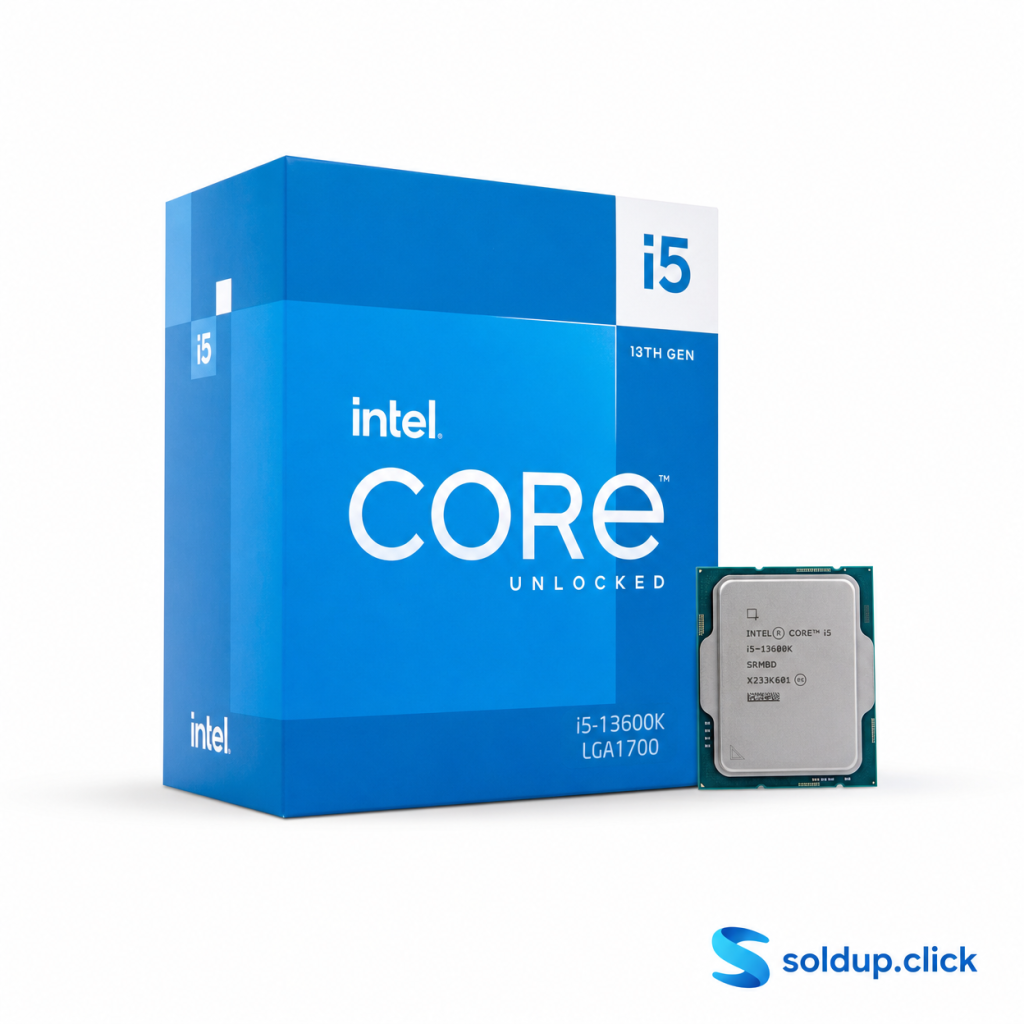
Intel Core i5-13600K Desktop Processor
May
Introduction
The Intel Core i5-13600K has quickly established itself as one of the most compelling value-oriented high-performance desktop processors in recent years. As the flagship model in Intel’s mainstream 13th Generation i5 lineup, it bridges the gap between mid-range affordability and enthusiast-grade performance. What makes this CPU particularly impressive is how it delivers performance levels that were previously reserved for high-end i7 and even i9 processors, all while maintaining a relatively accessible price point.
For gamers, students, content creators, and PC enthusiasts alike, the i5-13600K represents a “sweet spot” in modern desktop computing. It offers enough cores and clock speed to handle demanding workloads, while remaining efficient enough to run on reasonably priced cooling and motherboard setups. Whether you are building your first serious gaming PC or upgrading from an older generation platform, this processor stands out as one of the most balanced choices in Intel’s lineup.
In a market where CPU prices and performance gains often scale unevenly, the i5-13600K stands out by delivering disproportionate value for its cost. But to understand why it has become such a popular recommendation, we need to break down its architecture, real-world performance, and overall platform efficiency.
Key Specifications and Technical Overview
The Intel Core i5-13600K is built on a hybrid architecture featuring 14 total cores and 20 threads. This configuration consists of 6 Performance cores (P-cores) and 8 Efficiency cores (E-cores). This hybrid design, inherited from Intel’s higher-end Raptor Lake chips, allows the processor to intelligently divide workloads between high-performance and efficiency-focused cores.
The P-cores are responsible for handling demanding tasks such as gaming, single-threaded applications, and latency-sensitive workloads. They feature a base clock speed of 3.5 GHz and can boost up to 5.1 GHz, delivering strong responsiveness and excellent gaming performance. Meanwhile, the E-cores run at lower power and efficiency-focused frequencies but can still boost up to 3.9 GHz, making them ideal for background processes, multitasking, and parallel workloads.
The processor includes 24MB of L3 cache and 20MB of L2 cache, which significantly improves data access speeds and reduces latency in modern applications. This is particularly beneficial in gaming scenarios where fast cache access can directly impact frame stability and responsiveness.
Manufactured using Intel 7 process technology (an optimized 10nm-class node), the i5-13600K carries a base power rating of 125W. However, like most modern Intel unlocked processors, real-world power consumption can exceed this under heavy workloads or when power limits are lifted in BIOS settings.
The CPU uses the LGA1700 socket, ensuring compatibility with Intel 600-series and 700-series chipsets, including Z690, Z790, and select B660 boards. This allows for both budget-conscious and enthusiast-level builds, depending on motherboard selection.
Performance Analysis
The Intel Core i5-13600K delivers performance that far exceeds expectations for its price category. In gaming workloads, it consistently ranks among the best CPUs available, often matching or even surpassing more expensive processors. In many modern titles, the difference between the i5-13600K and higher-end CPUs like the i7-13700K or Ryzen 9 series is minimal, especially at higher resolutions where GPU limitations become the bottleneck.
In CPU-intensive games such as strategy titles, simulation games, and competitive esports games, the i5-13600K provides excellent frame rates and stable frame pacing. This makes it an ideal choice for high-refresh-rate gaming at 1080p and 1440p, where CPU performance matters most.
When paired with modern GPUs such as the RTX 4070, RTX 4070 Ti, or even RTX 4080, the processor is fully capable of keeping up without creating noticeable bottlenecks in most gaming scenarios. This level of performance from an i5-class chip was previously unheard of in earlier generations.
In productivity workloads, the i5-13600K also performs impressively. It handles video editing, photo processing, and 3D rendering significantly better than previous-generation i5 CPUs. Software like Adobe Premiere Pro, Photoshop, and Blender benefit from its additional E-cores, which help manage background tasks and parallel processing more efficiently.
For light to moderate content creators, the processor provides more than enough power to edit 4K videos, export media projects, and manage multitasking workflows without requiring an i7 or i9 upgrade.
In software development environments, the i5-13600K reduces compile times and improves workflow efficiency, especially in medium-sized projects. While it does not compete with high-core-count CPUs in extreme rendering or enterprise workloads, it offers excellent performance for its price class.
Architecture and Efficiency Improvements
One of the most important strengths of the i5-13600K is how effectively it uses Intel’s hybrid architecture. The combination of P-cores and E-cores allows the system to distribute workloads intelligently, ensuring that performance-heavy tasks receive priority while background processes do not interfere with system responsiveness.
Compared to previous-generation i5 processors, the addition of more E-cores significantly improves multitasking performance. Users can game, stream, and run background applications simultaneously without experiencing major slowdowns.
However, while efficiency is improved compared to older Intel designs, the processor is still relatively power-hungry under full load compared to some AMD alternatives. This is a trade-off for its strong performance output.
Thermals, Cooling, and Overclocking
The i5-13600K uses a soldered Integrated Heat Spreader (IHS), which improves heat transfer from the silicon die to the cooling solution. This design choice enhances thermal efficiency compared to older Intel CPUs that used thermal paste under the IHS.
In typical gaming scenarios, temperatures remain well within manageable ranges with a mid-range cooling solution. A high-quality air cooler such as the Noctua NH-U12S or a 240mm AIO liquid cooler is generally sufficient for most users.
Under heavy workloads or overclocking conditions, temperatures can rise significantly, but they remain more manageable than higher-end Intel chips like the i7-13700K or i9-13900K.
The unlocked “K” designation means users can overclock both P-cores and E-cores for additional performance. With proper cooling and motherboard support, modest performance gains can be achieved, especially in gaming and lightly threaded workloads.
Value for Money and Platform Cost
At a launch price of approximately $319, the Intel Core i5-13600K offers one of the strongest performance-to-price ratios in the entire CPU market. It delivers performance that rivals or exceeds CPUs costing significantly more, particularly in gaming workloads.
Compared to AMD’s Ryzen 5 7600X, the i5-13600K often matches or beats it in gaming while offering superior multi-threaded performance due to its higher core count. In some scenarios, it even competes with Ryzen 7-class processors.
Another major advantage is platform flexibility. Users upgrading from 12th Gen Intel systems can reuse existing LGA1700 motherboards, significantly reducing upgrade costs. For new builds, pairing the CPU with a B660 or Z690 motherboard and DDR4 memory can further reduce expenses without a major performance penalty.
This makes the i5-13600K one of the most cost-efficient entry points into high-performance PC gaming and productivity.
Pros and Cons
The Intel Core i5-13600K offers outstanding gaming performance for its price, strong multi-threaded capabilities for an i5-class CPU, excellent overclocking potential, and wide motherboard compatibility within the LGA1700 ecosystem.
However, it does have some drawbacks. Power consumption can be relatively high under sustained loads, requiring decent cooling solutions. While DDR4 support helps reduce costs, users opting for DDR5 will face higher platform expenses. Additionally, it does not match higher-core CPUs in extreme professional workloads such as heavy 3D rendering or large-scale simulation tasks.
Who Should Buy the i5-13600K?
The i5-13600K is ideal for budget-conscious gamers who still want high-end performance, first-time PC builders aiming for strong gaming frame rates, and users who want a balanced system for both gaming and productivity.
It is also an excellent choice for streamers who operate on a budget, as well as students and professionals who require strong multitasking capabilities without investing in higher-tier CPUs. Additionally, users upgrading from older Intel platforms will find it a particularly meaningful performance jump.
Conclusion
The Intel Core i5-13600K is a landmark processor in Intel’s 13th Generation lineup, redefining what users can expect from a mainstream CPU. It delivers near-flagship gaming performance, impressive multi-threaded capabilities, and excellent overall responsiveness at a price point that remains highly competitive.
While it is not the most power-efficient chip on the market, its performance-per-dollar ratio makes it one of the most recommended processors for modern PC builds. For most gamers and general users, the i5-13600K provides more than enough power for years to come, without requiring a premium investment.
In short, it is not just a good i5 processor—it is one of the best value CPUs Intel has ever released.
