Post
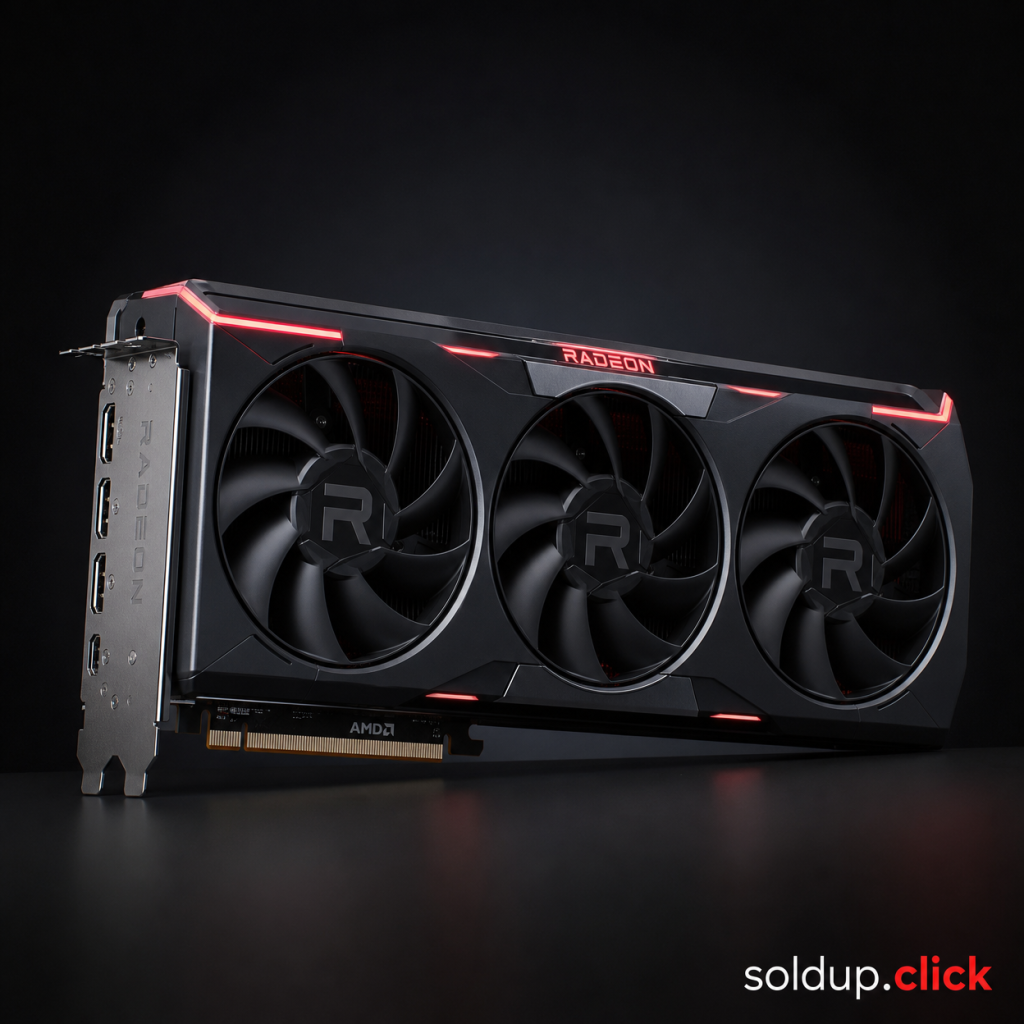
AMD Radeon RX 7900 XT 20GB
May
Introduction
The AMD Radeon RX 7900 XT is positioned as the slightly cut-down sibling of the flagship RX 7900 XT within AMD’s RDNA 3 lineup. While it does not aim to deliver absolute top-tier performance, it retains much of the same architectural foundation and offers a more accessible price point for high-end gamers.
With 20GB of GDDR6 memory and a powerful Navi 31 chiplet-based design, the RX 7900 XT targets users who want excellent 4K gaming performance without stepping up to the more expensive flagship model. It also appeals to content creators and power users who need substantial VRAM for demanding workloads.
In many ways, the RX 7900 XT represents AMD’s effort to balance performance, efficiency, and value in the upper enthusiast GPU segment.
Key Specifications and Technical Overview
The AMD Radeon RX 7900 XT is built on the Navi 31 GPU, which continues AMD’s shift toward a chiplet-based architecture. Instead of a single monolithic die, the GPU is composed of a central Graphics Compute Die (GCD) surrounded by multiple Memory Cache Dies (MCDs). This design improves manufacturing efficiency and allows AMD to scale performance more effectively across product tiers.
The RX 7900 XT includes:
- 10,752 Stream Processors
- 84 Compute Units (CUs)
- RDNA 3 architecture enhancements
The card is equipped with 20GB of GDDR6 memory connected via a 320-bit memory bus. This configuration delivers approximately 800 GB/s of memory bandwidth, which is more than sufficient for high-resolution gaming and professional workloads. While slightly lower than the 7900 XTX, this VRAM capacity is still significantly higher than competing NVIDIA GPUs in the same price class.
The boost clock reaches up to approximately 2.4 GHz, depending on cooling and power conditions. In real-world scenarios, the GPU often maintains stable high clock speeds thanks to RDNA 3’s efficiency improvements.
Key specifications include:
- PCIe 4.0 x16 interface
- HDMI 2.1 support
- DisplayPort 2.1 support (future-ready for high refresh rate 4K/8K displays)
The RX 7900 XT has a total board power (TBP) of 300W, placing it slightly below the XTX model and making it somewhat more efficient in exchange for reduced compute resources.
Performance Analysis
The RX 7900 XT delivers strong performance across modern gaming workloads, particularly in rasterization-heavy titles.
4K Gaming Performance
At 4K resolution, the RX 7900 XT is capable of delivering smooth gameplay in most modern AAA titles at high or ultra settings. In many cases, it achieves frame rates above 60 FPS without requiring aggressive upscaling.
Compared to the RX 7900 XTX, performance differences typically range between 5% and 10%, depending on the game and workload. In well-optimized titles, the gap can be even smaller, making the RX 7900 XT a very close alternative in practical gaming scenarios.
The 20GB VRAM buffer ensures that high-resolution textures and large game worlds can be handled without memory bottlenecks, which is especially important in newer games that push VRAM usage beyond 12GB or 16GB at 4K.
1440p Gaming Performance
At 1440p, the RX 7900 XT is extremely powerful, often exceeding 144 FPS in many AAA titles and significantly higher in esports games.
At this resolution, the GPU is often underutilized unless paired with high-refresh-rate monitors such as 165Hz or 240Hz displays. This makes it a great option for competitive gamers who also want the ability to play at 4K when desired.
Ray Tracing Performance and Upscaling
While the RX 7900 XT is strong in traditional rendering, ray tracing performance remains one of AMD’s weaker areas compared to NVIDIA.
Although RDNA 3 improves ray tracing capabilities over RDNA 2, NVIDIA’s dedicated RT cores still deliver better performance and efficiency in heavily ray-traced games. Titles like Cyberpunk 2077 or Metro Exodus Enhanced Edition show a noticeable performance advantage for NVIDIA GPUs at similar price tiers.
AMD’s alternatives include:
- FSR 2 (FidelityFX Super Resolution)
- RSR (Radeon Super Resolution)
These technologies improve performance by upscaling lower-resolution frames. While useful, they do not yet match the visual quality or performance gains of NVIDIA’s DLSS 3 Frame Generation in supported games.
As a result, the RX 7900 XT is best experienced with ray tracing set to low or medium, or disabled in performance-critical scenarios.
Content Creation and Productivity Performance
The RX 7900 XT performs well in content creation workloads, especially those that benefit from large VRAM capacity.
In applications such as Blender, DaVinci Resolve, and Adobe Premiere Pro, the GPU handles rendering, video playback, and encoding efficiently. The 20GB VRAM is particularly valuable for:
- 4K and 8K video editing workflows
- Large 3D scenes and animation projects
- Game development assets with high-resolution textures
- GPU-accelerated compute workloads
While NVIDIA retains an advantage in CUDA-optimized applications and AI workloads, AMD’s VRAM advantage makes the RX 7900 XT a strong option for memory-heavy production environments.
Architecture and RDNA 3 Improvements
The RX 7900 XT benefits from AMD’s RDNA 3 architecture, which introduces several key improvements over previous generations.
The chiplet-based design allows AMD to separate compute and memory functions, improving manufacturing efficiency and scalability. This also enables AMD to offer multiple GPU tiers using similar architectural foundations.
RDNA 3 improvements include:
- Higher instructions per clock (IPC)
- Improved power efficiency per compute unit
- Better clock scaling under load
- Enhanced cache architecture
These improvements help the RX 7900 XT deliver significantly better performance than the previous-generation RX 6950 XT, especially in high-resolution gaming scenarios.
Thermals, Power Consumption, and Design
With a 300W power rating, the RX 7900 XT strikes a balance between high-end performance and manageable power consumption.
While still requiring a robust PSU and cooling system, it is noticeably more efficient than higher-end flagship GPUs such as the RTX 4090.
Most AIB models feature triple-fan cooling solutions with large heatsinks and vapor chamber designs. Manufacturers such as Sapphire, PowerColor, and XFX are known for producing particularly strong thermal designs that keep temperatures and noise levels under control.
Physically, the card is large but typically slightly more manageable than flagship-class GPUs, still requiring careful case compatibility planning.
Value for Money and Market Position
At launch, the RX 7900 XT was priced around $899, placing it directly between the RTX 4070 Ti and RTX 4080 in NVIDIA’s lineup.
Its strongest value proposition lies in:
- Higher VRAM (20GB vs 16GB on RTX 4080)
- Strong rasterization performance close to RTX 4080
- Lower pricing compared to NVIDIA’s upper-tier offerings
However, NVIDIA still maintains advantages in:
- Ray tracing performance
- DLSS 3 Frame Generation
- AI and CUDA ecosystem support
This makes the RX 7900 XT particularly appealing for users who prioritize traditional gaming performance and long-term VRAM capacity over advanced ray tracing features.
Pros and Cons
The RX 7900 XT offers strong 4K rasterization performance, a generous 20GB VRAM buffer, competitive pricing relative to NVIDIA alternatives, and future-proof DisplayPort 2.1 support.
On the downside, ray tracing performance lags behind NVIDIA competitors, and AMD’s upscaling technologies do not yet fully match DLSS 3 in quality or adoption.
Who Should Buy the RX 7900 XT?
The RX 7900 XT is best suited for:
- 4K gamers who want high performance without paying flagship pricing
- Users who prioritize rasterization over ray tracing
- Content creators working with large VRAM-heavy projects
- Builders seeking strong AMD ecosystem performance at a reduced cost
It is less ideal for users heavily invested in ray tracing, AI workloads, or NVIDIA-specific software ecosystems.
Conclusion
The AMD Radeon RX 7900 XT is a powerful and well-balanced high-end GPU that delivers excellent 4K gaming performance and strong productivity capability. While it is slightly overshadowed by the RX 7900 XTX, it remains a highly competitive option in AMD’s lineup.
With its 20GB VRAM buffer, strong rasterization performance, and lower price compared to flagship GPUs, the RX 7900 XT stands out as a smart choice for gamers seeking high-end performance without entering ultra-premium pricing tiers.
For users who prioritize raw gaming performance and memory capacity over ray tracing features, the RX 7900 XT remains one of the most compelling high-end GPUs available today.
