Post
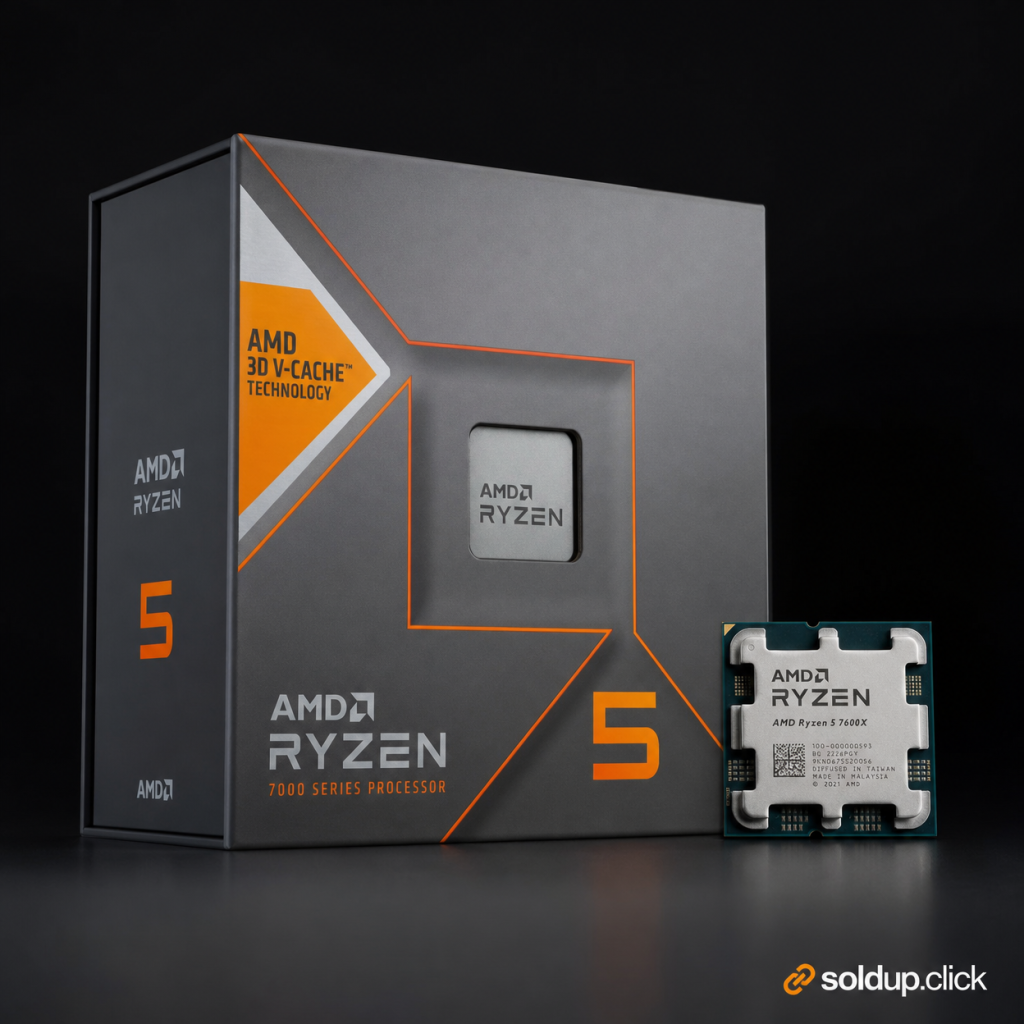
AMD Ryzen 5 7600X Processor
May
Introduction
The AMD Ryzen 5 7600X represents AMD’s mainstream entry point into the Zen 4 generation, delivering modern architecture and high clock speeds at a price aimed at value-conscious PC builders. As the direct successor to the extremely popular Ryzen 5 5600X, this processor continues AMD’s tradition of offering strong gaming performance in a six-core package that targets the sweet spot of price and performance.
What makes the 7600X particularly interesting is how much it advances beyond its predecessor. Zen 4 introduces higher instructions per cycle (IPC), significantly increased clock speeds, and support for a completely new platform in AM5. This combination allows the Ryzen 5 7600X to compete not only with previous-generation mid-range CPUs but also with newer high-core-count competitors in real-world gaming scenarios.
For gamers who prioritize smooth frame rates, responsiveness, and a modern upgrade path without entering enthusiast pricing tiers, the 7600X positions itself as a strong contender in the mid-range CPU market. However, with Intel offering highly competitive alternatives, the question becomes whether this six-core chip is still the best balanced choice in its category.
Key Specifications and Technical Overview
The AMD Ryzen 5 7600X features 6 cores and 12 threads, built on TSMC’s advanced 5nm manufacturing process. This node improvement over Zen 3 enables higher clock speeds, improved power efficiency, and better transistor density.
One of the standout characteristics of the 7600X is its high clock frequency. The processor operates with a base clock of 4.7 GHz and can boost up to 5.3 GHz, making it one of the fastest clocked six-core CPUs available at its release. These high frequencies are particularly beneficial in gaming workloads, where single-thread performance plays a crucial role.
The CPU includes 32MB of L3 cache and 6MB of L2 cache. While its cache capacity is smaller than higher-end Ryzen 7 and Ryzen 9 models, it is still sufficient for gaming and general productivity tasks. Cache efficiency plays an important role in reducing memory latency and improving frame stability in modern games.
The Ryzen 5 7600X uses AMD’s AM5 socket, which marks a major platform transition. Unlike previous generations that supported DDR4, AM5 is DDR5-only, reflecting AMD’s push toward higher memory bandwidth and future-proofing. The platform also supports PCIe 5.0, enabling next-generation GPUs and ultra-fast NVMe storage solutions.
The processor has a TDP of 105W, with real-world power consumption reaching up to approximately 142W under sustained load or boost conditions. While not extremely power-hungry, it does require proper cooling for optimal performance, especially during extended gaming or productivity sessions.
Performance Analysis
The Ryzen 5 7600X delivers excellent gaming performance, particularly in scenarios where single-core speed is most important. Thanks to Zen 4’s improved IPC and high boost clocks, the processor is highly responsive in modern game engines.
In gaming benchmarks, the 7600X performs strongly against both AMD’s previous-generation Ryzen 5000 series and Intel’s mid-range offerings. It is capable of delivering high frame rates in CPU-sensitive games, particularly at 1080p and 1440p resolutions where CPU performance is more impactful.
When paired with high-end GPUs such as the RTX 4070, RTX 4070 Ti, or even RTX 4080, the Ryzen 5 7600X is generally capable of keeping up in most gaming scenarios without becoming a significant bottleneck. However, in extremely CPU-heavy games or simulation titles, higher-core CPUs like the Ryzen 7 7800X3D or Intel i5-13600K may offer better performance consistency.
In multi-threaded workloads, the limitations of a six-core design become more apparent. While the 7600X performs well for light productivity tasks such as photo editing, casual video editing, and basic rendering, it cannot compete with higher-core CPUs in heavily parallel workloads.
For example, in video encoding or 3D rendering tasks, CPUs like the Intel i5-13600K or Ryzen 7 series processors significantly outperform the 7600X due to their higher core counts. This makes the 7600X more suitable as a gaming-focused processor rather than a hybrid gaming and productivity solution.
In everyday usage, however, the processor feels extremely responsive. Application loading times, system responsiveness, and multitasking performance are all excellent due to Zen 4’s strong single-core performance.
Architecture and Platform Advantages
Zen 4 represents a significant architectural improvement over Zen 3, bringing enhancements in branch prediction, execution efficiency, and overall IPC gains. These improvements allow the Ryzen 5 7600X to deliver better performance even when compared to higher-clocked previous-generation CPUs.
One of the most important advantages of the 7600X is its AM5 platform. This new socket introduces long-term upgradeability, meaning users can potentially upgrade to future Ryzen generations without replacing their motherboard.
The platform also supports DDR5 memory exclusively, which provides higher bandwidth and improved performance potential in memory-sensitive applications. While DDR5 was initially expensive at launch, prices have become more competitive, making AM5 more accessible over time.
PCIe 5.0 support is another forward-looking feature, enabling compatibility with next-generation graphics cards and storage devices. Although current GPUs do not fully saturate PCIe 4.0 bandwidth, this feature helps future-proof the platform.
Thermals, Cooling, and Power Behavior
The Ryzen 5 7600X does not include a stock cooler, which is important for buyers to consider when planning a build. AMD expects users to pair this CPU with an aftermarket cooling solution to achieve optimal performance.
Despite its relatively moderate core count, the processor can still reach high temperatures under load due to its aggressive boost behavior. Zen 4 CPUs are designed to push clock speeds as high as thermals allow, meaning better cooling can directly improve sustained performance.
A high-quality air cooler or a 240mm All-in-One (AIO) liquid cooler is typically sufficient for most users. Under gaming workloads, temperatures are generally manageable, but sustained productivity tasks can push the chip closer to its thermal limits if cooling is inadequate.
Power efficiency is reasonable but not class-leading. While Zen 4 is more efficient than previous generations in terms of performance per watt, Intel’s competing processors sometimes offer similar or better efficiency depending on workload.
Value for Money and Platform Considerations
At a launch price of approximately $299, the Ryzen 5 7600X is positioned as a mid-range gaming CPU competing directly with Intel’s i5-13600K. This makes it one of the most important CPUs in the mainstream performance segment.
In gaming performance, the 7600X competes closely with the i5-13600K, with each chip winning in different scenarios depending on the game engine and optimization. However, Intel often has an advantage in multi-threaded workloads due to its higher core count.
Where AMD gains an edge is platform longevity. The AM5 socket is designed for long-term support, meaning users can upgrade CPUs in the future without changing their motherboard. This provides a clear upgrade path that may reduce long-term system cost.
However, the requirement for DDR5 memory and AM5 motherboards increases initial build cost compared to DDR4-based Intel alternatives. This makes the total system cost an important consideration when choosing between platforms.
Pros and Cons
The Ryzen 5 7600X offers excellent gaming performance, very high clock speeds, strong single-core IPC, and access to AMD’s modern AM5 platform with DDR5 and PCIe 5.0 support. It is a very responsive and efficient gaming processor in its class.
However, it has limitations. Multi-threaded performance is weaker compared to higher-core competitors like Intel’s i5-13600K. It does not include a stock cooler, and the AM5 platform requires DDR5 memory and a compatible motherboard, increasing overall system cost.
Who Should Buy the Ryzen 5 7600X?
The Ryzen 5 7600X is best suited for gamers who prioritize strong frame rates and a modern platform with long-term upgrade potential. It is especially appealing for users building new systems who want a balance between performance and future-proofing.
It is less ideal for users who require heavy multi-threaded performance, such as video editors, 3D artists, or developers working with large-scale projects. In those cases, higher-core CPUs like the Ryzen 7 7700X or Intel i5-13600K offer better productivity performance.
Conclusion
The AMD Ryzen 5 7600X is a strong mainstream processor that successfully brings Zen 4 performance into a more accessible price bracket. With high clock speeds, strong gaming performance, and support for AMD’s forward-looking AM5 platform, it offers an excellent foundation for modern PC builds.
While it faces strong competition from Intel’s multi-core offerings, the 7600X remains a compelling choice for gamers who value simplicity, responsiveness, and long-term platform support. For gaming-focused builds, it delivers exactly what it promises: fast, efficient, and consistent performance in a modern desktop environment.
