Post
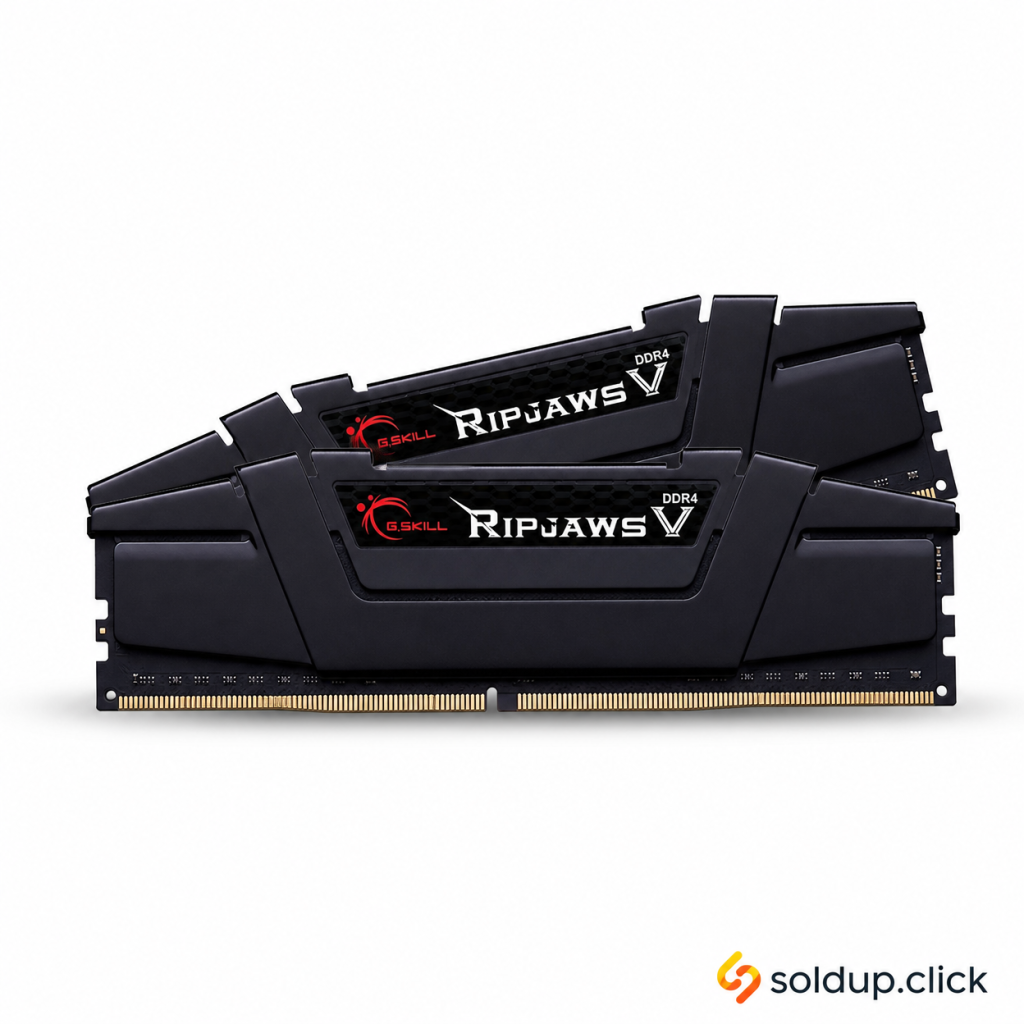
G.Skill Ripjaws V DDR4 16GB (2x8GB) 3600MHz
May
Building a high-performance PC today is more complex than simply choosing the fastest parts available. Modern hardware has become highly segmented, with clear distinctions between gaming-focused processors, workstation-grade CPUs, and GPUs optimized for either raw rasterization performance or advanced features like ray tracing and AI acceleration. Memory has also evolved significantly, with DDR5 gradually replacing DDR4 as the new standard. Understanding how these components interact is essential for choosing the right balance of performance, value, and future-proofing.
This overview brings together the key characteristics of today’s most important desktop CPUs, GPUs, and memory kits, highlighting where each product category excels and which type of user they are best suited for.
1. Modern Desktop CPUs: Performance vs Efficiency vs Specialization
Intel 13th Gen: Hybrid Performance Leadership
Intel’s 13th Generation processors, such as the Core i5-13600K, i7-13700K, and i9-12900K (12th Gen but still relevant), are built around a hybrid architecture combining Performance cores (P-cores) and Efficiency cores (E-cores). This design allows Intel CPUs to handle both heavy workloads and background tasks efficiently.
The Intel Core i5-13600K is widely considered one of the best value CPUs in recent years. With 14 cores (6 P-cores and 8 E-cores), it delivers performance that rivals older flagship chips. In gaming, it is extremely strong, often matching higher-tier processors while costing significantly less. It also performs well in multitasking and light content creation, making it ideal for mainstream enthusiasts.
Moving up, the Intel Core i7-13700K offers 16 cores and near-flagship performance. It is especially strong in gaming, often coming very close to the i9-13900K in real-world performance. For users who want high-end gaming performance without paying extreme prices, it represents a balanced choice.
Even older chips like the i9-12900K remain relevant due to strong gaming capability and solid multi-threaded performance, especially when found at discounted prices. Its hybrid architecture was the foundation for Intel’s modern CPU strategy and still performs competitively today.
Overall, Intel’s strengths lie in:
- Excellent gaming performance
- Strong single-core speeds
- High multi-threaded capability in mid-to-high tier models
However, power consumption and heat output can be relatively high, requiring strong cooling solutions.
AMD Ryzen 7000 and 5000: Efficiency, Cache, and Gaming Focus
AMD’s Ryzen lineup focuses heavily on efficiency, architecture improvements, and specialized designs.
The Ryzen 5 7600X represents the entry point into AMD’s AM5 platform. With 6 cores and high clock speeds, it performs extremely well in gaming but is limited in heavy multi-threaded workloads compared to Intel’s i5-13600K. However, its modern platform (DDR5 and PCIe 5.0 support) gives it long-term upgrade potential.
The Ryzen 7 7800X3D is arguably the best gaming CPU available in its generation. Its defining feature is 3D V-Cache technology, which dramatically increases L3 cache to improve gaming performance. This results in extremely high and consistent frame rates in many modern titles, often outperforming more expensive CPUs in gaming scenarios. It is less focused on productivity but unmatched in gaming efficiency.
On the higher end, the Ryzen 9 7950X is a workstation-level CPU designed for professionals. With 16 cores and 32 threads, it excels in rendering, video production, and scientific workloads. While it is also capable in gaming, its true strength lies in heavily parallelized tasks.
From the previous generation, the Ryzen 9 5900X and Ryzen 7 5800X remain strong AM4 options. They offer excellent value due to mature platform pricing and still deliver competitive gaming and productivity performance.
AMD’s strengths include:
- Excellent efficiency
- Strong multi-core performance (especially high-end chips)
- Best-in-class gaming CPU (7800X3D)
- Long-term platform support (AM5)
2. Modern GPUs: Gaming, Ray Tracing, and VRAM Wars
NVIDIA RTX 40 Series: Feature-Rich Performance
NVIDIA’s RTX 40-series GPUs are built on the Ada Lovelace architecture and are known for their strong ray tracing performance and advanced features like DLSS 3 Frame Generation.
The RTX 4090 stands at the absolute top of consumer graphics performance. It dominates 4K gaming and is also widely used in professional workloads such as AI processing, 3D rendering, and high-resolution video editing. With 24GB of VRAM, it offers unmatched headroom for demanding applications.
The RTX 4080 provides slightly reduced performance but remains a premium 4K GPU. It delivers excellent efficiency and strong ray tracing capability, though its pricing has often been debated relative to the performance gap from the 4090.
The RTX 4070 Ti and RTX 4070 represent the enthusiast and upper-mainstream tiers. These GPUs are ideal for 1440p gaming, with the ability to handle 4K gaming when DLSS is enabled. They offer a strong balance of performance, efficiency, and modern features.
The RTX 4060 Ti focuses on 1080p gaming and light 1440p use. While efficient and feature-rich, its 128-bit memory bus and 8GB VRAM (in some versions) can limit long-term performance in demanding titles.
NVIDIA’s strengths:
- Best ray tracing performance
- DLSS 3 AI frame generation
- Strong ecosystem for creators and AI workloads
- High efficiency in mid-range GPUs
AMD Radeon RX 7000 Series: VRAM and Rasterization Power
AMD’s RX 7000 series focuses on raw rasterization performance and large VRAM capacities.
The RX 7900 XTX is AMD’s flagship GPU, competing closely with the RTX 4080 in traditional rendering performance. With 24GB of VRAM, it is excellent for 4K gaming and content creation workloads that require large memory buffers. However, it lags behind NVIDIA in ray tracing performance.
The RX 7900 XT is a slightly cut-down version that still performs very well at 4K, offering strong value for high-resolution gaming.
The RX 7800 XT is one of the best 1440p GPUs in terms of value, offering 16GB of VRAM and strong rasterization performance, often competing directly with the RTX 4070.
Lower-tier cards like the RX 7700 XT and RX 7600 XT focus on 1080p and entry-level 1440p gaming, offering competitive pricing and solid performance for budget builds.
AMD’s strengths include:
- Excellent rasterization performance
- Large VRAM capacities
- Competitive pricing in mid-to-high range GPUs
- Strong value for 1440p and 4K gaming
3. Memory (RAM): DDR4 vs DDR5 Evolution
DDR5: The New Standard
DDR5 memory has become the standard for modern platforms like Intel 12th/13th Gen and AMD Ryzen 7000.
A common sweet spot is DDR5 6000MHz CL36, which provides an optimal balance of latency and bandwidth. Kits like Corsair Vengeance DDR5 and G.Skill Trident Z5 are widely used for both gaming and productivity builds.
Higher-end kits such as 6400MHz CL32 or 6200MHz CL36 offer slightly better performance but are primarily aimed at enthusiasts. In most gaming scenarios, the difference between 6000MHz and 6400MHz is small.
DDR5 benefits include:
- Higher bandwidth
- Improved efficiency
- Better scaling for future CPUs
However, it is more expensive than DDR4 and requires newer platforms.
DDR4: Still Relevant and Cost-Effective
Despite DDR5’s rise, DDR4 remains highly relevant due to its lower cost and mature ecosystem.
The 3600MHz CL16 configuration is considered the “sweet spot” for DDR4, especially for AMD Ryzen 5000 systems. Kits like G.Skill Ripjaws V or Crucial Ballistix are widely recommended for their balance of performance and affordability.
Even 3200MHz kits remain viable for budget systems, while high-frequency DDR4 (4000MHz+) appeals mainly to enthusiasts and overclockers.
DDR4 advantages:
- Much lower cost
- Mature and stable platform
- Excellent performance in gaming at 3600MHz
Conclusion
Modern PC hardware offers more choice than ever before, but also greater complexity. Intel CPUs excel in hybrid performance and gaming consistency, while AMD focuses on efficiency, cache innovation, and platform longevity. In GPUs, NVIDIA leads in ray tracing and AI-enhanced rendering, while AMD provides excellent rasterization performance and VRAM value. Meanwhile, DDR5 is becoming the standard for new builds, but DDR4 remains a powerful and cost-effective option for budget and mid-range systems.
Ultimately, the best PC build depends not on having the most powerful parts individually, but on balancing CPU, GPU, and memory according to your workload—whether that is competitive gaming, content creation, or professional productivity.
